
Advice & Insights
Health tips from our specialists
Can You Get Enough Vitamin D From Diet Alone in Perimenopause?
Wondering if food alone meets your vitamin D needs in perimenopause? Here’s what UK guidance says about bone health, supplements, and your options Quick answer: For most people in the UK, no — diet alone rarely provides enough vitamin D. This matters more once you reach perimenopause. Vitamin D is essential for the calcium-handling processes […]Wondering if food alone meets your vitamin D needs in perimenopause? Here’s what UK guidance says about bone health, supplements, and your options Quick answer: For most people in the UK, no —...
Read article →
How to Stop HRT: A Gentle, Evidence-Based Guide to Coming Off Treatment
How to Stop HRT: A Gentle, Evidence-Based Guide to Coming Off Treatment Quick answer: You can stop HRT by tapering gradually over 3–6 months or stopping abruptly — NICE (2024) considers both clinically valid. No mandatory age or time limit applies unless a specific medical reason, such as a hormone-sensitive breast cancer diagnosis, changes that. […]How to Stop HRT: A Gentle, Evidence-Based Guide to Coming Off Treatment Quick answer: You can stop HRT by tapering gradually over 3–6 months or stopping abruptly — NICE (2024) considers both...
Read article →
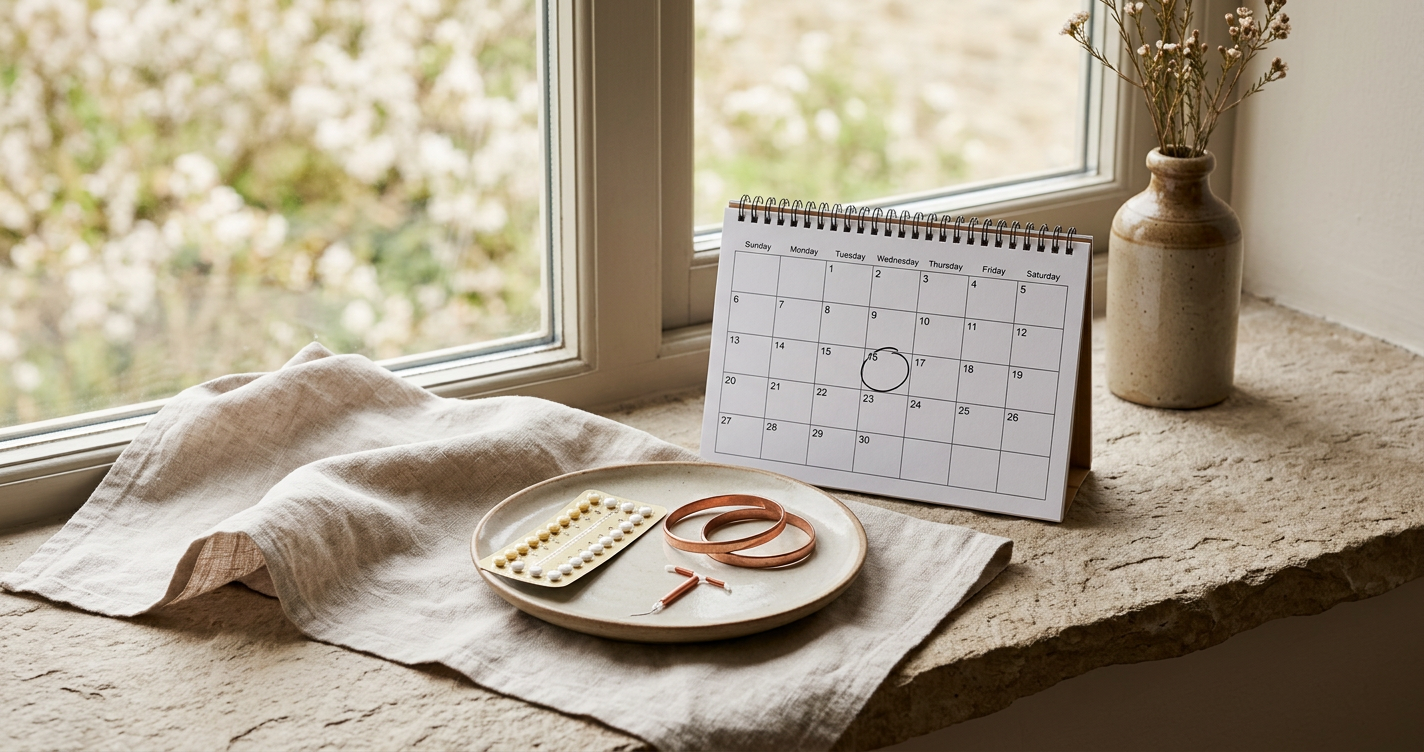
Still Need Contraception in Perimenopause? Here's What Actually Works
Quick answer: Yes, most people still need contraception during perimenopause, because ovulation becomes erratic rather than absent. The Faculty of Sexual and Reproductive Healthcare (FSRH) advises continuing contraception until age 55, when natural fertility can be considered to have ended. Options range from the hormonal coil (LNG-IUD) to barrier methods, each with different benefits depending […]Quick answer: Yes, most people still need contraception during perimenopause, because ovulation becomes erratic rather than absent. The Faculty of Sexual and Reproductive Healthcare (FSRH) advises...
Read article →
Trying to Conceive in Your 40s: What Your Fertility Is Telling You
Quick answer: Fertility declines with age as egg quantity and quality both fall. This makes conception harder and miscarriage more likely after 35 — and steeply so after 40. An AMH blood test can offer insight into ovarian reserve, but it cannot predict your chances of pregnancy. The contraceptive pill can also mask signs of […]Quick answer: Fertility declines with age as egg quantity and quality both fall. This makes conception harder and miscarriage more likely after 35 — and steeply so after 40. An AMH blood test can...
Read article →
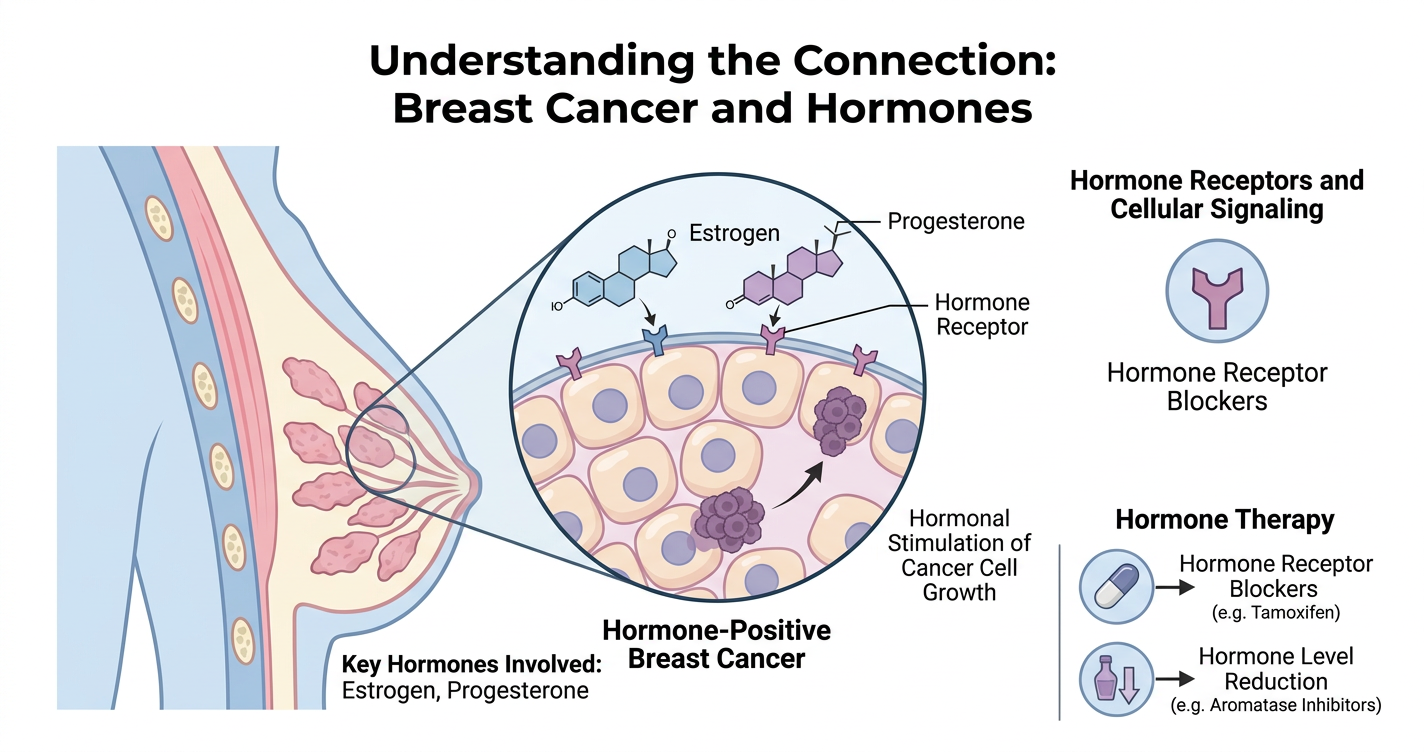
Understanding Breast Cancer: Genetics vs. Lifestyle
Quick answer: Genetics account for around 5–10% of breast cancer cases, with inherited mutations like BRCA1 and BRCA2 carrying the highest individual risk. Most cases result from a combination of age, hormonal exposure, and lifestyle factors — many of which you can understand, monitor, and, in some cases, influence. Knowing your personal risk profile is […]Quick answer: Genetics account for around 5–10% of breast cancer cases, with inherited mutations like BRCA1 and BRCA2 carrying the highest individual risk. Most cases result from a combination of age,...
Read article →
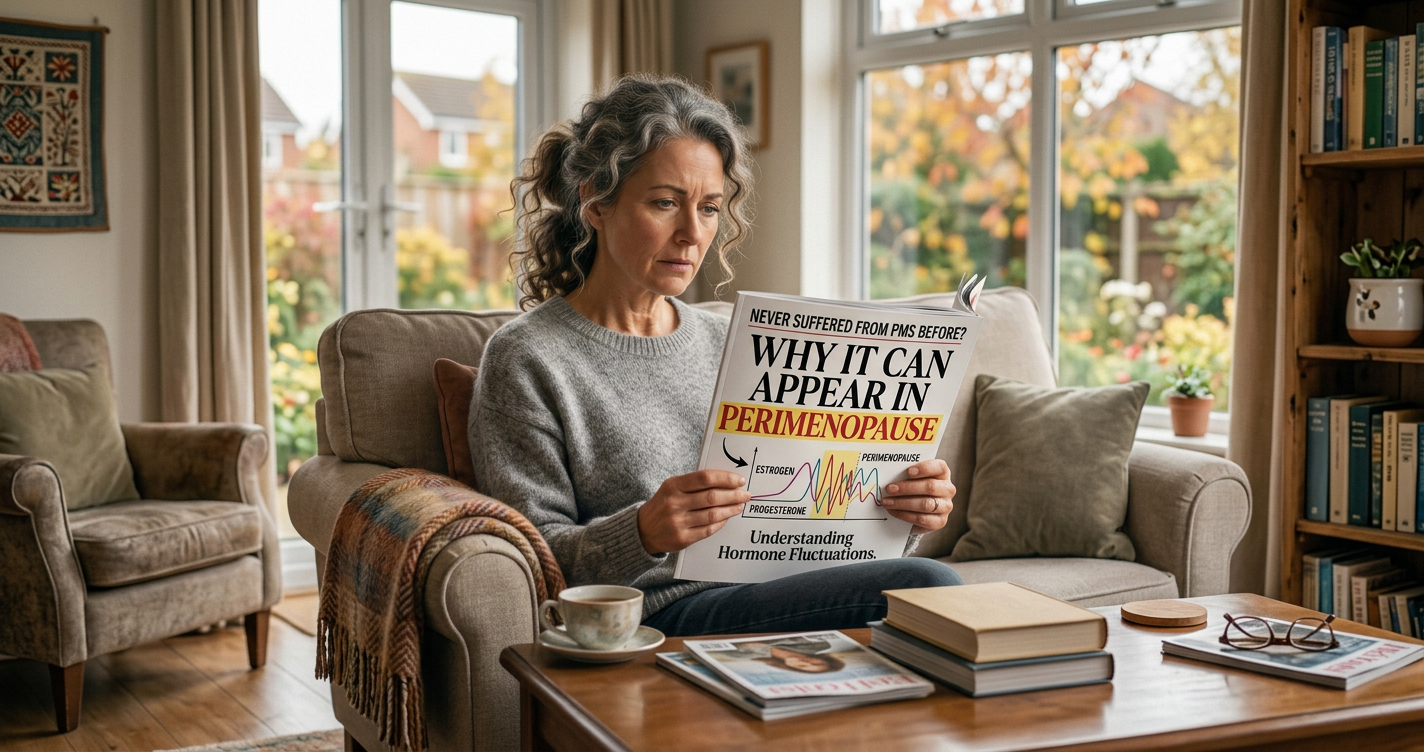
Never Suffered from PMS Before? Why It Can Appear in Perimenopause
Quick answer: New or severe PMS and PMDD-like symptoms can appear for the first time in your 40s because perimenopause causes erratic, unpredictable hormone swings. These fluctuations affect how your brain responds to allopregnanolone, a hormone that influences mood. The good news? It’s treatable, and you don’t have to simply cope. You’ve spent decades sailing […]Quick answer: New or severe PMS and PMDD-like symptoms can appear for the first time in your 40s because perimenopause causes erratic, unpredictable hormone swings. These fluctuations affect how your...
Read article →

Brittle, Ridged Nails at Midlife: Is It Really Hormones?
Quick answer: Nail changes like ridging, splitting, and brittleness are common at midlife and partly reflect natural ageing. The link to falling oestrogen is plausible but not firmly proven. Just as often, brittle nails point to iron deficiency or thyroid problems — so it’s worth ruling those out before assuming it’s “just menopause.” Have you […]Quick answer: Nail changes like ridging, splitting, and brittleness are common at midlife and partly reflect natural ageing. The link to falling oestrogen is plausible but not firmly proven. Just as...
Read article →
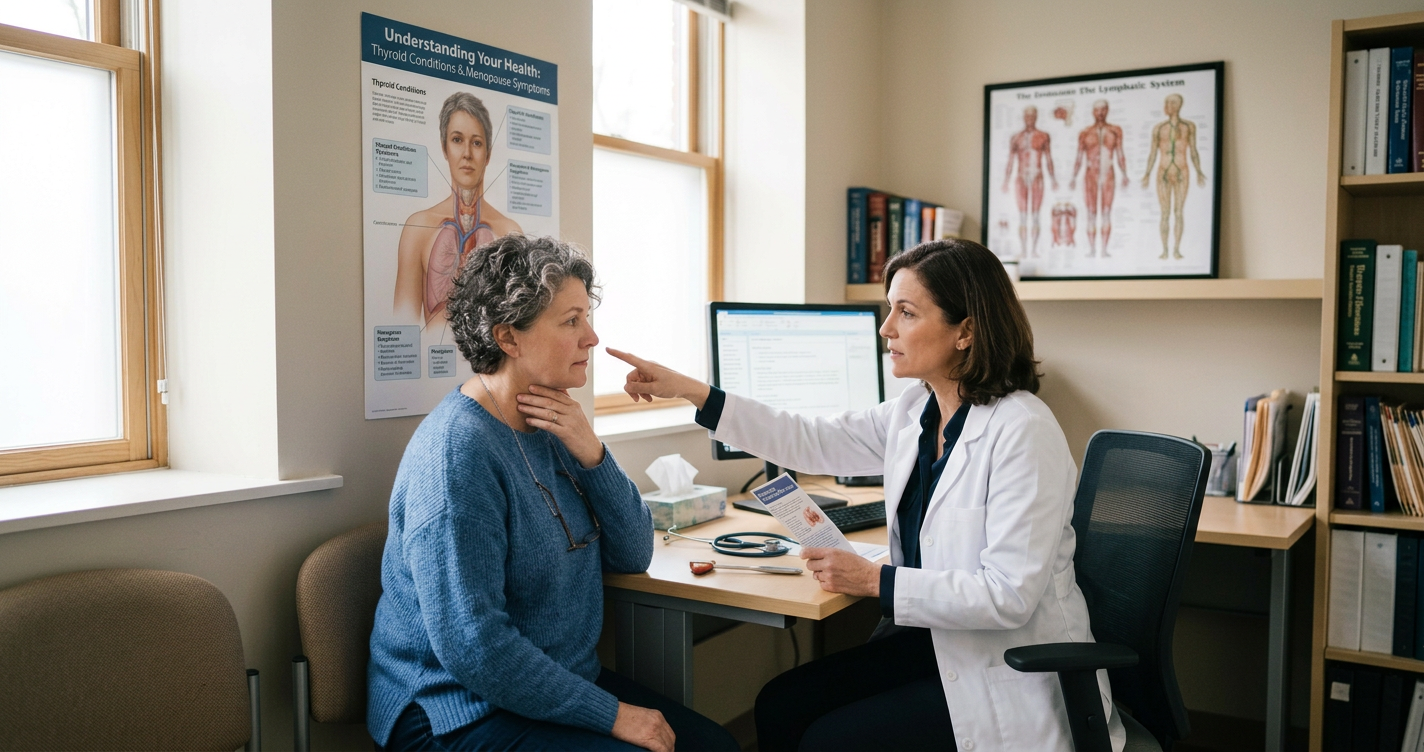
Thyroid or Menopause? Why the Two Get Confused — and Why Your GP Is Right to Check Both If someone has told you your fatigue, brain fog, low mood, or weight gain is “just perimenopause,” ask one more question before you accept that: has anyone actually checked your thyroid? At Amber Green Clinics, we see […]Thyroid or Menopause? Why the Two Get Confused — and Why Your GP Is Right to Check Both If someone has told you your fatigue, brain fog, low mood, or weight gain is “just perimenopause,”...
Read article →

Specialist Care for Hormonal Health and Longevity
Quick answer: Amber Green Clinics offers integrated, specialist care for hormonal health, led by a Consultant Pharmacist, Independent Prescriber, Personal Trainer, and Nutrition Specialist. Patients report 94% symptom relief within 12 weeks, no GP referral is needed, and you can start with a free 15-minute discovery call. Hormonal changes can feel confusing, isolating, and at […]Quick answer: Amber Green Clinics offers integrated, specialist care for hormonal health, led by a Consultant Pharmacist, Independent Prescriber, Personal Trainer, and Nutrition Specialist. Patients...
Read article →