
IIrregular Bleeding in Perimenopause: What’s Normal and What’s Not
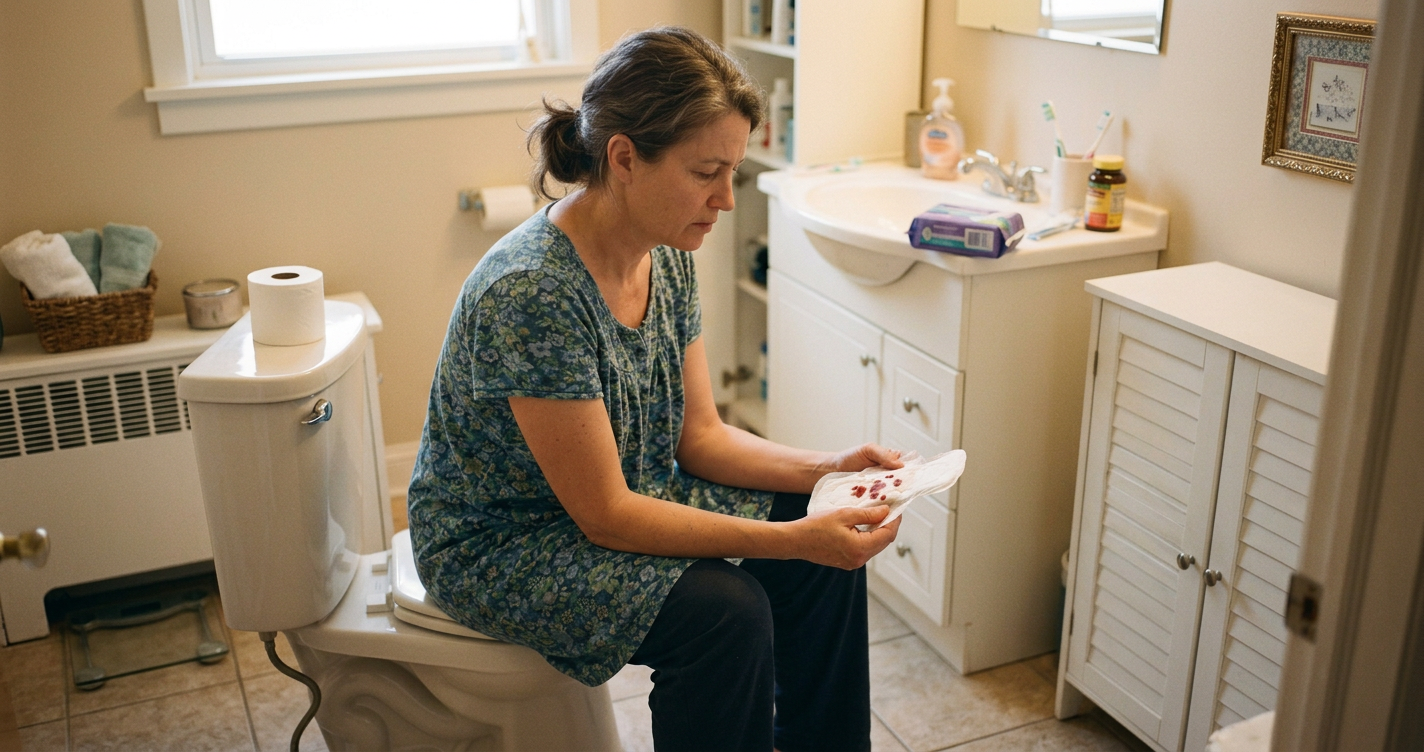
Perimenopausal bleeding can be heavier, lighter, or more erratic than anything you’ve experienced before. Here’s how to tell normal hormonal change from something that needs investigating — and why any bleeding after menopause should never be ignored.
Irregular bleeding is common during perimenopause due to fluctuating oestrogen and progesterone levels. Heavier periods, skipped cycles, and light spotting can all be normal features of the menopause transition. However, certain patterns — including bleeding after menopause, bleeding between periods without a clear cause, and excessively heavy periods — require prompt clinical assessment. Always seek advice if you are unsure.
Few things create more anxiety during the menopause transition than a change in bleeding. You might have spent decades knowing exactly what to expect each month, only to find that your cycle has become unpredictable, heavier, lighter, or seemingly random. That uncertainty is unsettling. And for many women, the worry isn’t just inconvenience — it’s the fear that something might be wrong.
The truth is that irregular bleeding in perimenopause is one of the most common and least talked-about aspects of the transition. Hormonal fluctuations during this phase can cause your periods to change dramatically, sometimes overnight. But while many changes are a normal part of the process, some patterns do warrant investigation. Knowing the difference is what this guide is here to help with.
Below, you’ll find a clear explanation of why bleeding changes during perimenopause, what counts as heavy menstrual bleeding under NICE guidelines, which signs need attention, and what your treatment options look like once a clinician has completed an assessment.
This article is for educational purposes only and does not constitute medical advice. If you have concerns about your bleeding, please seek guidance from a qualified clinician.
Why Does Bleeding Change During Perimenopause in the First Place?
Perimenopause typically begins in a woman’s mid-to-late 40s, though it can start earlier — sometimes as young as 35. During this phase, the ovaries produce oestrogen and progesterone in increasingly erratic amounts. In some months, oestrogen surges higher than normal, while in others, progesterone fails to rise adequately after ovulation — or ovulation doesn’t happen at all.
These hormonal shifts directly affect the uterine lining (the endometrium). When oestrogen is high and progesterone is low or absent, the lining can build up more than usual — leading to heavier or prolonged periods. When hormone levels drop suddenly, a period may arrive earlier than expected. When both are low, the cycle may skip entirely.
The result is a pattern of abnormal uterine bleeding during the menopause transition that can include cycles that shorten, lengthen, or become completely unpredictable. This is biologically normal — it reflects the ovaries winding down rather than malfunctioning. However, “common” and “safe” are not always the same thing, and some changes still need a clinician to evaluate them.
What Counts as Heavy Menstrual Bleeding During Perimenopause?
NICE guideline NG88 on heavy menstrual bleeding defines heavy menstrual bleeding (HMB) as excessive blood loss that interferes with a woman’s physical, emotional, social, or material quality of life. The clinical threshold is blood loss of more than 80ml per cycle, but in practice this is difficult to measure precisely — so clinicians focus on impact rather than volume alone.
Signs that your periods may count as heavy include:
- Soaking through a pad or tampon every hour or two for several consecutive hours
- Needing to use double protection (a pad and a tampon together)
- Passing clots larger than a 50p coin
- Bleeding that lasts longer than seven days
- Symptoms of anaemia, such as fatigue, breathlessness, or heart palpitations
Heavy periods in perimenopause rank among the most frequently reported symptoms among women in their 40s and early 50s. While hormonal changes often drive this, NG88 is clear that clinicians should always assess heavy menstrual bleeding to rule out structural causes — including fibroids, endometrial polyps, or, in rare cases, endometrial cancer.
If your periods are heavy enough to affect your daily life, that alone is reason enough to seek help. No clinician should simply tell you to put up with it.
What Does Bleeding Between Periods Mean During Perimenopause?
Spotting or bleeding between periods — known as intermenstrual bleeding — is another change that can appear during perimenopause. Occasional light spotting around ovulation is common and usually harmless. But regular intermenstrual bleeding, or bleeding that is heavier or more frequent, deserves attention.
Possible causes include:
- Hormonal fluctuation — anovulatory cycles (where ovulation doesn’t occur) can trigger irregular shedding of the uterine lining
- Endometrial polyps — small growths inside the uterus that are benign but can cause unpredictable bleeding
- Fibroids — non-cancerous growths in or around the uterus, which are particularly common in perimenopausal women
- Spotting on HRT — if you have recently started hormone replacement therapy, irregular breakthrough bleeding is common in the first three to six months as your body adjusts
- Cervical or endometrial pathology — less common, but always worth excluding
If you take HRT and experience spotting that continues beyond six months, or that returns after a period of settled bleeding, your prescriber should review it. NICE guideline NG23 on menopause diagnosis and management recommends that clinicians always investigate unexplained or persistent intermenstrual bleeding on HRT, rather than assuming it is a routine side effect.
Why Is Bleeding After Menopause Always Worth Checking?
Postmenopausal bleeding — any bleeding that occurs 12 months or more after your last period — should never be ignored or dismissed. This applies even if it seems very light, lasts only a day, or appears to have an obvious explanation.
The reason is straightforward: postmenopausal bleeding is one of the key warning signs for endometrial cancer. Around 90% of women diagnosed with endometrial cancer report postmenopausal bleeding as their first symptom. When clinicians catch this cancer early, survival rates are high — which is exactly why prompt investigation matters so much.
NICE guideline NG12 on suspected cancer recognition and referral recommends that clinicians investigate postmenopausal bleeding urgently, particularly in women aged 55 and over. For younger women who are clearly post-menopausal, the same principle applies: get assessed quickly.
Postmenopausal bleeding does not always point to cancer. It can stem from:
- Vaginal atrophy (thinning of the vaginal lining due to low oestrogen)
- Endometrial or cervical polyps
- Endometrial hyperplasia (thickening of the uterine lining)
- Endometrial cancer
Clinical investigation is the only way to find out which of these applies to you. This typically includes a pelvic ultrasound to measure endometrial thickness and, where indicated, a hysteroscopy or biopsy. Please do not wait to see whether it resolves on its own.
When Should You Seek an Urgent Appointment for Period Changes?
While many bleeding changes during perimenopause are benign, the following warrant urgent or prompt assessment — ideally within days rather than weeks:
- Any bleeding after menopause, however light or brief
- Periods so heavy that you soak through protection hourly for two or more consecutive hours
- Bleeding accompanied by significant pelvic pain, particularly if sudden or severe
- Bleeding between periods that is unexplained and recurring
- Spotting on HRT that persists beyond six months or that returns after a settled period
- Any associated symptoms such as unexplained weight loss, fatigue, or abdominal swelling
Many women feel hesitant to ask when to worry about period changes, not wanting to “waste” anyone’s time. Please set that concern aside. NICE guidelines exist specifically so that clinicians assess abnormal uterine bleeding during the menopause transition promptly, and no clinician will consider you troublesome for raising it.
What Treatment Options Are Available Once Assessment Is Complete?
Once a clinician has ruled out structural or sinister causes, several effective approaches can help you manage perimenopausal bleeding changes. The right option depends on your individual circumstances, preferences, and whether you also wish to address other menopause symptoms at the same time.
Hormonal options include:
- HRT (hormone replacement therapy) — combined HRT (oestrogen plus progestogen) can regulate the cycle and reduce heavy bleeding in perimenopausal women. It also addresses other symptoms such as hot flushes, sleep disruption, and mood changes. As NICE NG23 notes, HRT remains the most effective treatment for menopausal symptoms.
- The levonorgestrel-releasing intrauterine system (Mirena coil) — licensed for both contraception and heavy menstrual bleeding, it can also deliver the progestogen component of HRT when combined with systemic oestrogen.
- Progestogen-only options — such as oral norethisterone or a progestogen-only pill, which can help regulate and lighten periods.
Non-hormonal options include:
- Tranexamic acid — a non-hormonal tablet you take during heavy periods to reduce blood loss
- Non-steroidal anti-inflammatory drugs (NSAIDs) — such as mefenamic acid, which can reduce both blood loss and associated pain
Procedural or surgical options — for women who prefer not to use hormonal treatments and have a confirmed structural cause (such as fibroids or polyps), options may include endometrial ablation, polypectomy, or myomectomy. Clinicians typically consider these after trying hormonal approaches, or where a specific structural indication exists.
The goal of treatment is not just to manage bleeding in isolation. For women in the menopause transition, addressing bleeding changes within the broader context of hormonal health — including mood, sleep, bone health, and cardiovascular wellbeing — leads to better long-term outcomes.
You Do Not Need to Manage This Alone
Perimenopausal bleeding can be exhausting to deal with, both physically and emotionally. Cancelling plans because of an unexpected heavy period, carrying extra supplies just in case, lying awake wondering whether this is normal — none of that is trivial. And none of it is something you should simply accept as the cost of getting older.
The right clinical support can make a profound difference. That might mean getting clarity on what is causing your symptoms, finding a treatment that genuinely works for you, or simply having a clinician take your concerns seriously.
At Amber Green Clinics, our specialist team provides personalised assessments and treatment plans for women navigating perimenopause and the menopause transition. Led by a Consultant Pharmacist and Independent Prescriber with deep expertise in hormonal health, we offer an integrated approach that combines clinical precision with compassionate, one-to-one care.
Ready to get answers? Book a consultation at ambergreenclinics.com or call the clinic on 020 8050 4959. We also offer a free 15-minute discovery call if you’d like to speak with our team before committing to a full appointment — no pressure, no obligation, just a conversation about how we can help. 💚
Frequently Asked Questions About Irregular Bleeding in Perimenopause
Is irregular bleeding in perimenopause normal?
Yes, irregular bleeding is a common and expected feature of perimenopause. Fluctuating oestrogen and progesterone levels cause the uterine lining to behave unpredictably, which can lead to heavier periods, skipped cycles, or light spotting between periods. That said, not all irregular bleeding is automatically benign — patterns that are persistent, very heavy, or occur after menopause always warrant clinical assessment.
How heavy is too heavy during perimenopause?
NICE guideline NG88 defines heavy menstrual bleeding by its impact on daily life rather than volume alone. If you are soaking through a pad or tampon every hour for several consecutive hours, passing large clots, bleeding for more than seven days, or experiencing symptoms of anaemia such as fatigue or breathlessness, your bleeding counts as heavy and a clinician should assess it.
Is spotting on HRT something to worry about?
Light spotting in the first three to six months of starting HRT is common and usually settles as your body adjusts to the hormones. Your prescriber should review any spotting that persists beyond six months, returns after a period of regular bleeding, or comes alongside other symptoms, as NICE NG23 recommends.
What causes postmenopausal bleeding, and how serious is it?
Postmenopausal bleeding has several possible causes, including vaginal atrophy, endometrial polyps, endometrial hyperplasia, and endometrial cancer. Because postmenopausal bleeding is one of the primary warning signs for endometrial cancer — which responds very well to early treatment — NICE guideline NG12 recommends urgent investigation. Any bleeding that occurs 12 or more months after your last period needs prompt assessment.
Can heavy periods during perimenopause be treated without hormones?
Yes. Non-hormonal options include tranexamic acid, which reduces blood loss during heavy periods, and NSAIDs such as mefenamic acid, which can reduce both bleeding and pain. For women with a confirmed structural cause such as fibroids or polyps, procedural interventions may also be appropriate. A specialist can help identify the most suitable option based on your individual circumstances.
When should I seek an urgent appointment for perimenopausal bleeding?
Seek an urgent appointment if you experience any bleeding after menopause, soak through protection hourly for two or more consecutive hours, notice unexplained and recurring bleeding between periods, or experience spotting on HRT that does not settle within six months. Also seek prompt care for any bleeding that comes with pelvic pain, unexplained weight loss, or abdominal swelling.
Does Amber Green Clinics offer remote consultations for bleeding concerns?
Yes. Amber Green Clinics offers telephone, video, and in-person consultations to suit your schedule and location. You can book directly at ambergreenclinics.com or by calling 020 8050 4959. No GP referral is required.
References
- National Institute for Health and Care Excellence. Menopause: diagnosis and management (NICE guideline NG23). Updated 2019. Available at: nice.org.uk/guidance/ng23
- National Institute for Health and Care Excellence. Heavy menstrual bleeding: assessment and management (NICE guideline NG88). Updated 2021. Available at: nice.org.uk/guidance/ng88
- National Institute for Health and Care Excellence. Suspected cancer: recognition and referral (NICE guideline NG12). Updated 2023. Available at: nice.org.uk/guidance/ng12
Meta data
Meta title: Irregular Bleeding in Perimenopause: What’s Normal?
Meta description: Perimenopausal bleeding can be heavier, lighter, or more erratic than anything you’ve experienced before. Here’s how to tell normal hormonal change from something that needs investigating — and why any bleeding after menopause should never be ignored.
Meta data
Meta title
Irregular Bleeding in Perimenopause: What’s Normal?