
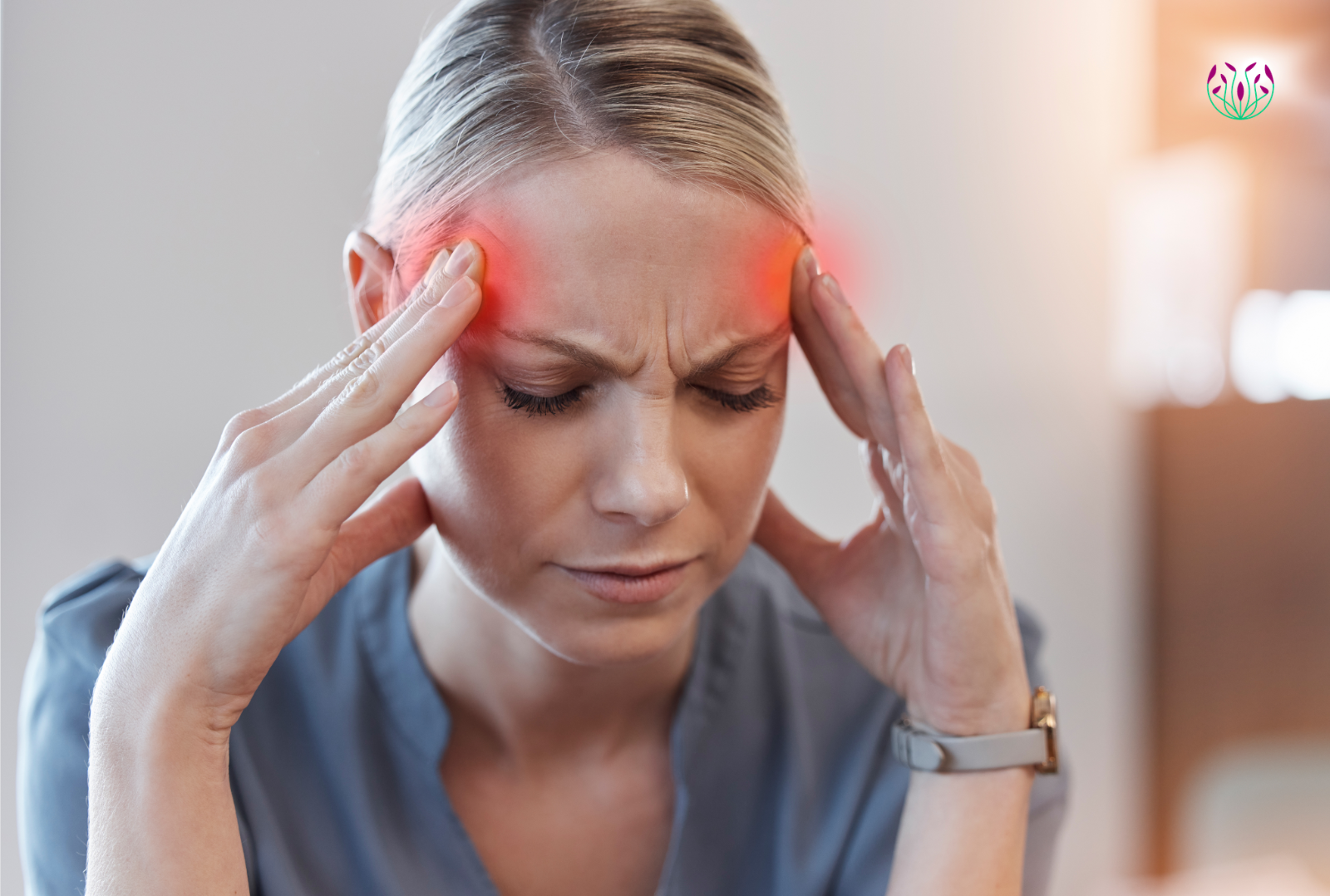
Hormonal Migraines and Menopause: Why They Change
TL;DR: Hormonal migraines are driven by oestrogen fluctuations. During perimenopause, erratic oestrogen levels cause many women to experience more frequent and severe migraines. After menopause, migraines often improve as hormones stabilise. Treatment options include triptans, CGRP antibody therapies, traditional preventatives, and carefully chosen HRT — with the best approach depending on migraine type, symptom pattern, and individual risk profile.
If your migraines have changed since perimenopause began, you are not imagining it. For many women, a pattern that was once predictable — linked to the monthly cycle, manageable with the right medication — starts to feel completely unpredictable. Attacks may come more often, last longer, or arrive with new symptoms. This can feel disorienting, especially when so much else is changing at the same time.
A clear biological explanation exists for this shift. Migraines, particularly in women, are closely tied to oestrogen. As perimenopause disrupts the hormonal rhythms the brain has adapted to over decades, migraines often respond in kind. Understanding this relationship gives you a much stronger foundation for managing what is happening — and for knowing what treatments are now available.
This article explains why migraines are hormonal in the first place, how and why they change through the perimenopause transition, what happens after menopause, and which evidence-based treatments can help. It covers HRT considerations, newer CGRP antibody therapies, traditional preventatives, and lifestyle strategies, as well as guidance on when specialist input is warranted.
Why are migraines hormonal in the first place?
Migraine is a neurological condition marked by recurring episodes of moderate to severe head pain, often accompanied by nausea, light sensitivity, and sound sensitivity. Around one third of people with migraine also experience aura — neurological symptoms such as visual disturbances, numbness, or speech changes that occur before or during the headache phase (Goadsby et al., 2017).
The oestrogen connection
Migraine affects women roughly three times more often than men, and the gap is most pronounced during the reproductive years. The primary reason is oestrogen. It influences the sensitivity of the trigeminal pain pathway and affects serotonin levels — a neurotransmitter central to migraine. When oestrogen drops sharply, as it does in the days before menstruation, the risk of a migraine attack rises significantly. This is known as oestrogen withdrawal migraine (MacGregor, 2020).
Menstrual migraines occur in the two days before and the first three days of menstruation. They tend to be more severe, longer in duration, and less responsive to standard treatment than migraines at other points in the cycle (MacGregor and Guillebaud, 1998).
Why do perimenopause migraines often get worse?
Perimenopause — the transition phase leading up to the final menstrual period — typically begins in the mid-to-late 40s, though it can start earlier. During this time, oestrogen does not simply decline; it fluctuates erratically. Levels may surge higher than in earlier reproductive life before dropping steeply, and these swings can happen within the same menstrual cycle.
Hormonal variability is the key driver
Research by Pavlovic et al. (2016) found that migraine frequency rises significantly during perimenopause, with the greatest worsening in the late perimenopause stage. Hormonal variability — not simple oestrogen decline — drives this change. For women who previously had predictable menstrual migraines, losing a regular hormonal pattern makes attacks harder to anticipate or prevent.
A compounding effect
Other perimenopausal symptoms add further complexity. Disrupted sleep, heightened stress, and night-time hot flushes all act as migraine triggers in their own right (Andrasik, 2007). The menopause transition therefore creates a compounding effect: the hormonal environment becomes more volatile at exactly the time when other triggers are becoming more common.
What happens to migraines after menopause?
The picture after menopause — defined as 12 consecutive months without a menstrual period — is generally more positive. Once oestrogen settles into a consistently low range rather than fluctuating unpredictably, many women find their migraines improve markedly. This stabilisation removes the sharp oestrogen withdrawal events that were driving attacks.
Studies suggest that around two thirds of women with a history of menstrual migraines report improvement after natural menopause (MacGregor, 2020). The picture is less clear for women who undergo surgical menopause (oophorectomy), which causes a sudden and steep hormonal drop. These women are more likely to see migraines worsen, at least in the short term — highlighting how much the rate and size of oestrogen change matters, not just the absolute hormone level.
Can HRT help or hinder perimenopause migraines?
The relationship between HRT and migraines is nuanced. The right approach depends on the type and route of HRT, whether migraines occur with or without aura, and how migraines are currently managed.
Route of administration
Oral oestrogen undergoes first-pass liver metabolism and produces peaks and troughs in circulating oestrogen — a pattern that can trigger migraines. Transdermal oestrogen (patches, gels, or sprays) delivers oestrogen directly through the skin, producing stable, consistent levels without those fluctuations. For women with migraines, transdermal HRT is generally preferred (MacGregor, 2020; NICE, 2019).
Cyclical versus continuous HRT
In cyclical combined HRT, progestogen is added for part of the cycle to protect the uterus. Withdrawing progestogen during the break phase can itself trigger migraines. Continuous combined HRT provides both hormones without breaks, avoiding these cyclical shifts — and is often better tolerated from a migraine perspective.
Migraine with aura and HRT safety
This is an important clinical distinction. Migraine with aura carries a small, independent increased risk of ischaemic stroke. Combined oral contraceptives containing oestrogen are generally contraindicated in women with migraine with aura. The position with HRT is more nuanced: transdermal oestrogen at standard menopause doses does not appear to carry the same thromboembolic risk as oral oestrogen and is not subject to the same absolute contraindication. Even so, careful individual assessment is essential. Women with migraine with aura should discuss their specific situation with a specialist before starting or continuing HRT (NICE, 2019; MacGregor, 2020).
What are the treatment options for migraines during perimenopause?
Do triptans still work for hormonal migraines during perimenopause?
Triptans remain a first-line acute treatment for moderate-to-severe migraine. They bind to serotonin receptors, constrict dilated cranial blood vessels, and reduce neurogenic inflammation. They treat attacks once they begin, and certain formulations — such as naratriptan or frovatriptan, which have longer half-lives — can also provide short-term prevention during the perimenstrual window. Triptans are generally safe and well-tolerated, though they are not suitable for people with certain cardiovascular conditions.
What are CGRP antibody treatments and are they suitable for perimenopause migraines?
Calcitonin gene-related peptide (CGRP) plays a central role in migraine. It releases during attacks and drives the neurogenic inflammation that produces head pain. Anti-CGRP monoclonal antibody treatments — including erenumab, fremanezumab, and galcanezumab — represent a major advance in migraine prevention (Goadsby et al., 2017). Given by monthly or quarterly injection, these medications target the CGRP pathway and have shown meaningful reductions in monthly migraine days in clinical trials.
For women with frequent perimenopause migraines — especially where attacks have become less predictable and harder to manage with acute treatments alone — CGRP antibody therapies offer a clinically meaningful option. They do not interact with the hormonal drivers of migraine in the way oestrogen-based approaches do, making them relevant regardless of HRT status.
Are traditional preventative medications effective for hormonal migraines in perimenopause?
Established preventatives — including beta-blockers (such as propranolol), anticonvulsants (such as topiramate and valproate), and some antidepressants — can reduce migraine frequency. They suit women whose migraines are frequent or disabling. Peikert et al. (1996) demonstrated the efficacy of magnesium supplementation as a preventative option; it carries a favourable safety profile and may appeal to women who prefer to minimise pharmaceutical load. The best choice depends on individual symptom pattern, other health conditions, and personal preference — ideally with specialist guidance.
How does oestrogen add-back during the perimenstrual window help with menstrual migraines?
For women not yet taking HRT who have identifiable perimenstrual migraine triggers, short-term oestrogen supplementation around menstruation can buffer the sharp oestrogen drop that sets off attacks. Applying transdermal oestrogen gel for several days around the expected withdrawal phase smooths out the hormonal decline without committing to a sustained hormonal regime. MacGregor and Guillebaud (1998) described this approach in detail; careful timing relative to the cycle is essential, and clinical guidance is recommended.
Which lifestyle factors make the biggest difference to migraines during menopause?
Lifestyle factors interact directly with the biological triggers of migraine, and their influence grows during perimenopause as the hormonal environment becomes less stable (Andrasik, 2007).
- Sleep: Sleep deprivation and disrupted sleep are well-established migraine triggers. Night sweats and hot flushes during perimenopause frequently interrupt sleep, creating a compounding effect. Addressing perimenopausal sleep disruption — whether through HRT, non-hormonal interventions, or sleep hygiene strategies — can directly cut migraine frequency.
- Stress: Stress activates the hypothalamic-pituitary-adrenal axis and influences CGRP release. Regular stress management practices — including mindfulness, exercise, and structured relaxation — have shown benefit in migraine management.
- Caffeine: Moderate caffeine intake may help abort early migraine attacks, but high consumption and, in particular, abrupt withdrawal are recognised triggers. Consistent, moderate intake is better than variable use.
- Hydration: Dehydration is a reliable migraine trigger. Adequate daily fluid intake is a simple, consistently recommended measure.
When should you seek specialist help for migraines during menopause?
Seek specialist input when migraines occur frequently (typically eight or more days per month), when attacks significantly affect quality of life, or when acute treatments are being used more than ten days per month — which risks medication-overuse headache. A specialist review is also advisable when your migraine pattern changes substantially, including new-onset aura, prolonged aura, or any unfamiliar neurological symptoms.
Women managing both perimenopause migraines and HRT decisions benefit most from integrated specialist care. The interaction between hormonal management and migraine is nuanced enough that a clinician with expertise in both areas — rather than a general approach to either in isolation — is likely to produce better outcomes.
Ready to take the next step? Book a consultation with Amber Green Clinics
If your migraines have changed during perimenopause and you are unsure what to do next, you do not have to navigate this alone. At Amber Green Clinics, our specialist team combines expertise in hormonal health with a genuinely personalised approach — so your treatment plan reflects your specific migraine pattern, your HRT considerations, and your broader health picture.
Book your free 15-minute discovery call at ambergreenclinics.com or call us on 020 8050 4959. There is no obligation — it is simply a conversation about what is happening and how we can help.
Frequently asked questions about hormonal migraines and menopause
Can perimenopause cause migraines to start for the first time?
Yes. Some women experience their first migraines during perimenopause. Erratic oestrogen fluctuations during this transition can sensitise the trigeminal pain pathway, even in women with no previous migraine history. New-onset headaches during perimenopause should always be assessed by a clinician to confirm the diagnosis and rule out other causes.
Does HRT make migraines better or worse?
The answer depends largely on the type and route of HRT. Transdermal oestrogen delivers consistent hormone levels without peaks and troughs, making it generally better tolerated than oral HRT in women with migraines. Cyclical combined HRT can trigger migraines during the progestogen-free phase; continuous combined HRT tends to be preferable. Effects vary between individuals and require clinical assessment.
Is it safe to take HRT if I have migraine with aura?
Individual assessment is essential here. Migraine with aura is associated with a slightly increased stroke risk, and combined oral contraceptives are generally contraindicated in women with this migraine type. Transdermal HRT at standard menopause doses is not subject to the same absolute contraindication, but a specialist should evaluate your cardiovascular and stroke risk profile before recommending any hormonal treatment.
What is the best preventative treatment for migraines during perimenopause?
No single universal answer exists. CGRP antibody therapies offer the most targeted modern option for migraine prevention and have strong trial evidence. Traditional preventatives such as propranolol and topiramate remain effective choices. Magnesium supplementation has also shown efficacy with a favourable safety profile (Peikert et al., 1996). The optimal choice depends on migraine frequency, other health conditions, HRT status, and personal preference.
Will my migraines improve after menopause?
For most women — around two thirds of those with menstrual migraines — migraines improve after natural menopause as oestrogen stabilises at a consistently low level (MacGregor, 2020). Women who experience surgical menopause are less likely to see this improvement without hormonal support, because the hormonal change is more abrupt.
References
- Andrasik, F. (2007). Behavioural treatment of headache. Neurological Sciences, 28(S2), S86–S89.
- Goadsby, P.J., Holland, P.R., Martins-Oliveira, M., Hoffmann, J., Schankin, C., & Akerman, S. (2017). Pathophysiology of migraine: a disorder of sensory processing. Physiological Reviews, 97(2), 553–622.
- MacGregor, E.A. (2020). Menstrual and perimenopausal migraine: a narrative review. Maturitas, 142, 24–30.
- MacGregor, E.A., & Guillebaud, J. (1998). Combined oral contraceptives, migraine and ischaemic stroke. British Journal of Family Planning, 24(2), 55–60.
- NICE (2019). Menopause: diagnosis and management (NG23). National Institute for Health and Care Excellence.
- Pavlovic, J.M., Allshouse, A.A., Santoro, N.F., Crawford, S.L., Thurston, R.C., Neal-Perry, G.S., Lipton, R.B., & Derby, C.A. (2016). Sex hormones in women with and without migraine: evidence of migraine-specific hormone profiles. Neurology, 87(1), 49–56.
- Peikert, A., Wilimzig, C., & Köhne-Volland, R. (1996). Prophylaxis of migraine with oral magnesium: results from a prospective, multi-center, placebo-controlled and double-blind randomized study. Cephalalgia, 16(4), 257–263.
This article is for educational purposes and does not constitute medical advice. Please consult a qualified healthcare professional before making any decisions about your treatment
This article is for educational purposes and does not constitute medical advice. Please consult a qualified healthcare professional before making any decisions about your treatment.